
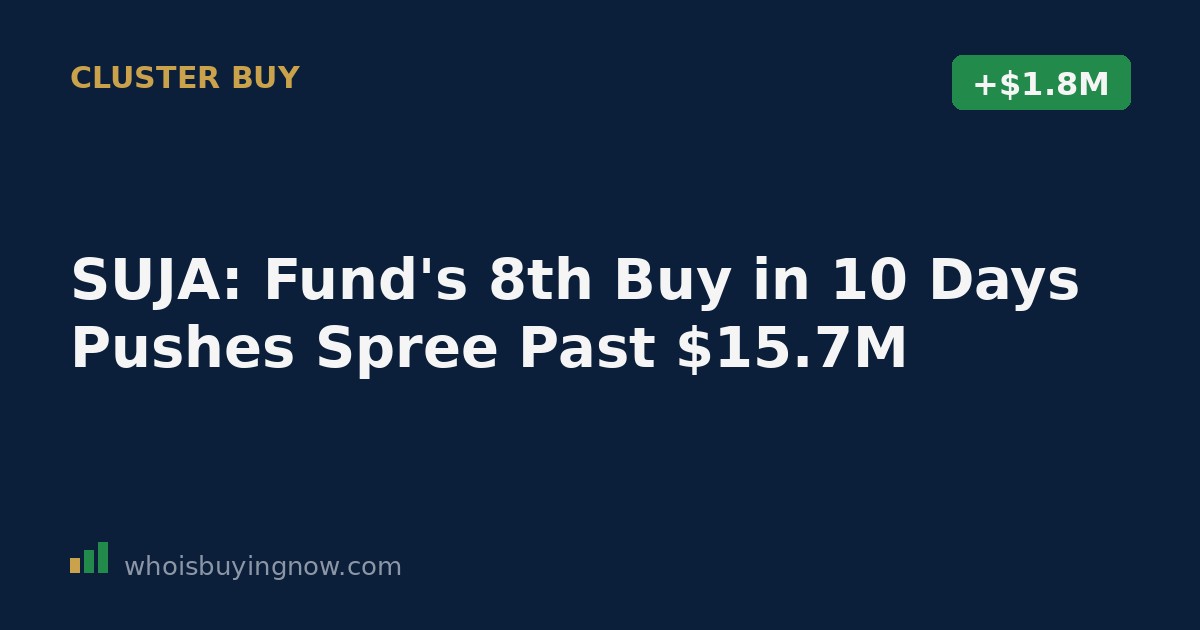
Paine Schwartz Food Chain Fund V GP, Ltd., an insider at SUJA LIFE, INC. (SUJA), purchased another 175,000 shares of the company on September 2, 2026, paying $10.26 per share for a total outlay of $1,795,500.00. The purchase was made on the open market, meaning the fund used its own capital rather than exercising options or receiving a grant.
Following the transaction, the fund’s indirect holdings — shares held through an entity structure rather than in the insider’s own name — rose to 11,621,253 shares. Regulatory filings list the position as held indirectly, which is common for private equity-style investment vehicles like this one.
Part of a Larger Buying Pattern
This is not an isolated purchase. Over a ten-day stretch between August 24 and September 2, 2026, the same insider has now made eight separate open-market purchases of SUJA stock, with the combined value of that buying spree reaching $15,704,068. That kind of sustained, repeated buying activity from a single insider is what our system flags as a cluster buy — a signal distinct from a one-off purchase because it shows a pattern of continued conviction across multiple trading days and price points rather than a single decision made at one moment in time.
We’ve been tracking this pattern as it developed. Earlier entries in the sequence were covered in SUJA: Fund Buys $2.15M More, Spree Tops $10.9M, which detailed how the cumulative total climbed past $10.9 million before this latest addition pushed it further still.
Academic research on insider trading disclosures has found that clustered buying — multiple insiders, or a single insider making repeated purchases over a short window — tends to correlate with above-average stock performance in the periods that follow, more so than isolated single-insider purchases. That said, this pattern is one data point among many that market participants might consider, and it does not constitute a recommendation to buy or sell SUJA shares. Insider purchases can reflect a range of motivations, including confidence in long-term fundamentals, portfolio rebalancing decisions, or terms tied to fund structures, and the filings themselves do not disclose the reasoning behind the trades.
Form 4 disclosures like this one are filed with the SEC within two business days of a transaction, giving the public a relatively fast look at how insiders are positioning themselves relative to the companies they oversee. As this buying sequence continues, we’ll keep tracking each new filing as it’s disclosed.
→ See all SUJA coverage on WhoIsBuyingNow
Source: original SEC Form 4 filing.